
Featured, Insights • June 30, 2026
Reframing the Role of Engineering Partners for Aging Gas Infrastructure
In the landscape of aging infrastructure, the role of the gas infrastructure consultant is critical in supporting utility owners in the delivery of safe, reliable and cost-effective service across the natural gas sector. As consultants design the replacement of aging systems—work that comprises a large portion of their responsibilities—they spend considerable time looking backward and researching historical data that will inform the solution today. However, we find that many discussions regarding consultants don’t capture their full depth beyond drafting and coordination activities. Meaning, there are entire responsibilities, impact, and possibly achievements that are being left out of the discussion. This is a traditional pattern in the gas infrastructure discourse, and we’d like to challenge that tradition by highlighting the gas infrastructure consultant as a role with significant project impact. As we know, replacing aging gas infrastructure is no easy endeavor, even with policies to use as a foundation—so it’s imperative that our industry understands what is really going into our new infrastructure.
Policies and Standards
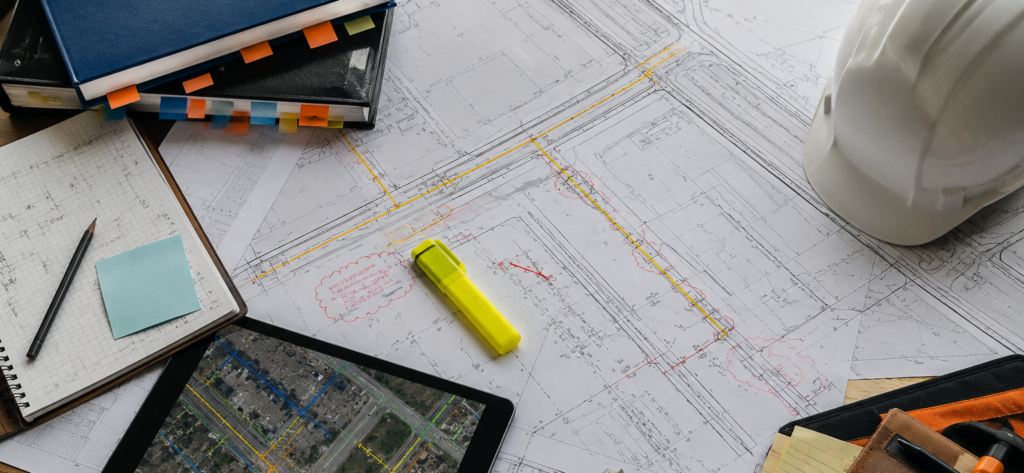
First, it’s important to understand the constants that guide the implementation of new gas infrastructure features: policies and standards. Policies are based on legal regulations that govern utility work, while standards are expressed by utility agencies and informed by experience and engineering judgement. However, standards will often reflect the policies in place, and regulations evolve and increase over time. While safety and standardization are the goals, their specifications are specific to a region, state, or city. Each is determined by considering historical factors, existing infrastructure, and even the local climate.
As far as compliance goes, there’s a shared responsibility amongst all stakeholders involved in the project. During a project, utilities provide consultants with design manuals, specifications, and organization requirements. They also regularly update consultants whenever requirements change, so everyone is working from the same information. The gas utility owner is responsible for their systems and has the final authority, but consultants, contractors, agencies, and municipalities all play a role in making sure projects are designed, reviewed, permitted, and constructed following all state, local, and federal rules and regulations. Each stakeholder holds a piece of the puzzle, with the consultant playing a central role in bringing those pieces together.
Traditional Perspectives of Gas Infrastructure Consultants

With these constants in mind, let’s get an understanding of the traditional perspectives of the gas infrastructure consultant. Traditionally, consultants have been viewed as having a narrow, task-based role—focused on delivering specific outputs such as design plans or transferring information between stakeholders. In many cases, they’ve been seen primarily as information coordinators, relaying one piece or groups of information from one party to another, rather than actively shaping solutions. In many ways, this perspective has been influenced by the responsibilities of the gas infrastructure consultant of earlier years. With fewer resources and less technology available to them, earlier gas infrastructure consultants’ project responsibilities looked very different from today, as documentation and technical analysis were less feasible. Things like corrosion evaluations, material testing, hydraulic analysis, and other engineering studies weren’t as heavily emphasized or readily available. This prompted the consultant to focus more on gathering information from survey, environmental, planning, and other groups, then coordinating with stakeholders to move projects through design and approvals, and supporting utilities in bidding and awarding construction.
Of course, earlier consultants had some level of responsibility outside of the traditional scope of simple information coordination, but there was a different demand for the level of involvement they held. This approach worked for the needs at the time, but today’s infrastructure systems are more complex, and there are significantly more requirements and stakeholders involved.
Aging Gas Infrastructure and Consultant Impact
Before having a more robust discussion about the modern gas infrastructure consultant, it’s important to first define what replacing gas infrastructure is. From a gas utility owner’s perspective, replacing aging gas infrastructure is ultimately about balancing safety, reliability, cost, and long-term value. As infrastructure ages, maintenance requirements often increase, and the risk of leaks, service interruptions, and other operational issues becomes more significant. Utility providers need to determine whether continued repairs are a practical long-term solution or whether replacement is the most cost-effective option. This evaluation should consider not only the up-front capital investment but also the expected operating costs and performance of the system over its remaining life. Utilities must also consider their responsibility to ratepayers, as infrastructure investments are ultimately passed through to customers, requiring a careful balance between system integrity, long-term value, and maintaining affordable service.
It’s also important to consider how future energy needs and regulatory requirements may affect the value of the investment. Because gas infrastructure is typically expected to remain in service for several decades, utilities should assess whether projected demand, electrification trends, and evolving environmental policies could impact the long-term utilization of the asset. In some cases, alternatives such as targeted system retirement, electrification, or renewable gas solutions may warrant consideration alongside traditional replacement projects.
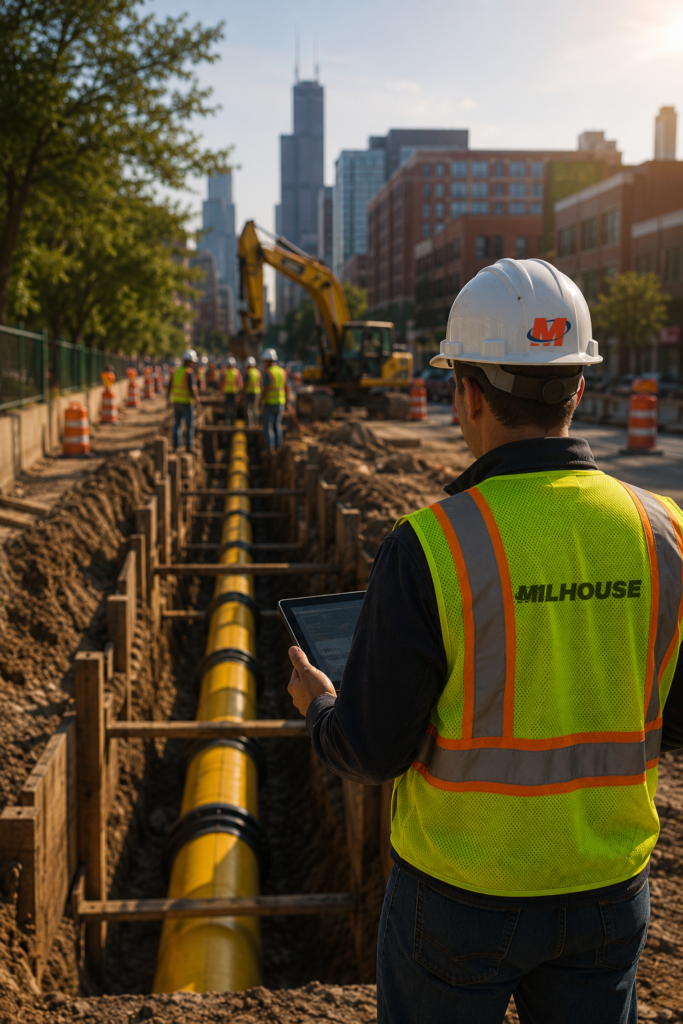
Successful infrastructure replacement also depends on thoughtful planning and coordination. Aligning projects with other utility or municipal construction work can reduce costs and minimize disruptions to customers and the surrounding community. Engaging with regulators, local governments, stakeholders, and the community throughout the process helps ensure that investment decisions support both current operational needs and long-term system objectives.
Like other critical assets, gas infrastructure has a limited service life and requires periodic replacement to maintain reliability and support future community growth. Proactive infrastructure investment helps ensure the system can meet increasing demand while reducing long-term operational risks.
Impact of the Consultant
In the context of replacing aging gas infrastructure, a consultant like Milhouse brings a disciplined, due diligence-driven approach—spending significant effort ahead of construction to gather critical information, coordinate with municipalities, agencies, utilities, and stakeholders, and proactively evaluate constructability, schedule impacts, and potential conflicts before they become construction issues. Technology allows us to identify issues earlier and communicate more efficiently, but projects also involve more stakeholders and requirements than before. Consultants are no longer just passing information between parties; we help identify risks, recommend solutions, and guide projects from start to finish.
As subject matter experts, our responsibilities start before the design process and continue through construction. We identify conflicts, collaborate with stakeholders, gather information, help determine the timing and urgency of replacing aging gas infrastructure, and prepare plans for permitting and construction.
A consultant like Milhouse works closely with the client throughout the entire project lifecycle and helps identify constraints and develop solutions. Because of that, Milhouse is a key part of the entire process, not just the design phase.
We don’t just prepare plans for permitting; we lead technical coordination and resolution across stakeholders, ensuring information is communicated effectively throughout the life of the project.
Our experience with utilities and agencies nationwide affords us a broad perspective and ability to find creative solutions.
This closely synthesizes with many of our gas infrastructure project approaches, like on the Garfield Ridge Phase 13A project, which is currently under design for Peoples Gas (PGL). After confirming the scope and project limits with the client for a section of aging gas infrastructure requiring replacement—which was located beneath a railroad in the City of Chicago—our team evaluated the feasibility of replacing the existing gas main while considering existing utilities, proposed projects in the vicinity, railroad infrastructure, available right-of-way, pavement moratoriums, environmental constraints, and limited real estate for construction activities.
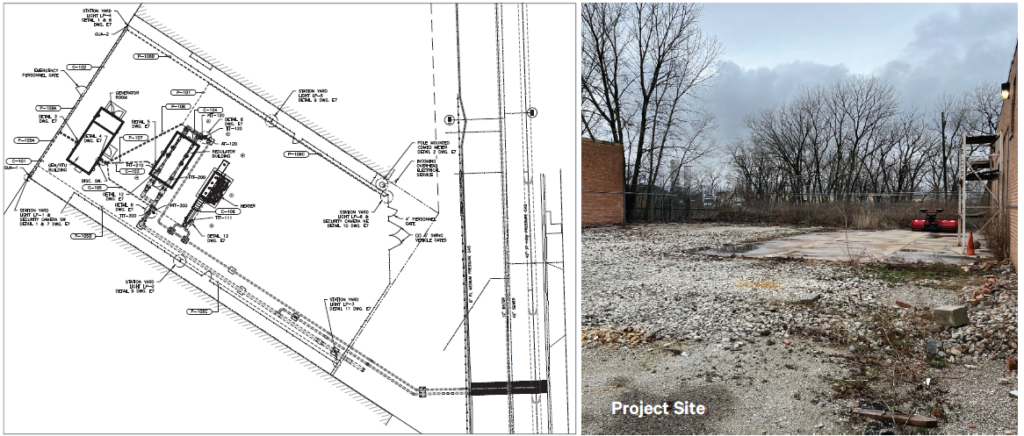
After feasibility planning, as part of the engineering design, Milhouse engaged a geotechnical consultant to perform soil borings and provide a geotechnical report for the proposed jack-and-bore crossing. We reviewed the subsurface conditions and geotechnical report to perform calculations related to shoring and excavation support requirements to help ensure the work could be constructed safely. Based on the findings and calculations, we developed installation plans, profiles, and construction details for the proposed gas main replacement. Milhouse then supported PGL in obtaining all necessary permits required for construction and installation of the gas main through the City, railroad, and other authorities having jurisdiction.
Throughout the life of the project, Milhouse actively minimized impacts to the railroad, avoided conflicts with existing utilities and infrastructure, evaluated alternative construction methodologies and engineering best practices, drove alignment among stakeholders, and collaborated with PGL to integrate our engineering recommendations into the design and implementation approach. By identifying potential issues during the design phase, we helped reduce construction risks and provided the client with a practical, functional solution for replacing aging infrastructure.
Whether you’re new to the industry or an experienced practitioner, this discussion illustrates the complexity of today’s gas infrastructure consultant. In the context of replacing infrastructure from a previous era, the role has become much more than the traditional perspective of drafter, coordinator, or doer suggests.
Today, the consultant partners with the client to develop comprehensive, innovative solutions to complex challenges by:

“Supporting utilities nationwide gives us early visibility into emerging challenges and regulatory shifts, often well before they impact every market. We understand what works—and what doesn’t—across diverse systems and operating environments. That perspective, combined with the depth of our team’s expertise, enables us to move beyond engineering plans on paper and deliver strategic, forward-thinking solutions to the complex challenges utilities face.”
– Jamie Schwegmann, PE, PMP | Vice President, Gas Engineering
Looking ahead, we expect the role to continue to express change as industry conventions, technologies, and regulations continuously update. At Milhouse, our experts are energized by the opportunity to remain on the forefront of our critical gas infrastructure sector, staying on top of emerging trends and any shifts in policies and standards.
Want to speak with experts that understand the challenges of your assets and learn how to scale their expertise? Let’s talk!