
Featured, Insights • September 23, 2026
Every Drop Counts: Improving Non-Revenue Water Through Data Validity
Have you ever thought about the infrastructure that delivers clean water to your tap every day? When you turn on the faucet, water appears almost instantly, making it easy to take this essential service for granted. Consider the processes that have to happen behind the scenes to make that flow possible. Each step involves significant deliberate thought. From sourcing water from rivers, reservoirs, or underground aquifers to water treatment, pumping through miles of pipes, storage, and finally the water’s safe delivery to homes and businesses—the journey is far more complex than most people realize.
With so many stages in that journey, there are also many points where water can be lost, mismeasured, or otherwise go unaccounted for. This is known as non-revenue water (NRW), and understanding where and why it occurs is critical for utilities looking to improve efficiency and operate more sustainably.
What is NRW?
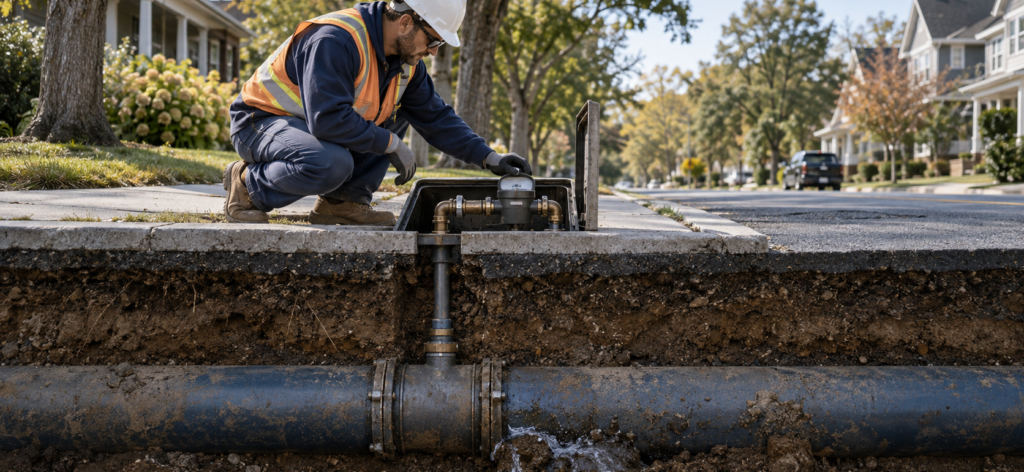
NRW is water that has been produced, treated, and pumped into the distribution system but never generates revenue for the water utility. In other words, it is water that is lost before it can be accurately measured and billed to a customer. These losses can occur for many reasons, including leaks in aging pipes, overflowing storage tanks, inaccurate meters, data handling errors, or even unauthorized consumption. Every gallon of NRW represents a lost resource that has already been invested in through treatment, energy, labor, and infrastructure, but did not produce a return. High levels of NRW suggest that the utility is confident with high volumes of lost water that does not produce revenue, despite the effort that goes into its collection and storage. Low levels of NRW suggest that a utility is being more mindful about their resource and consider greater volumes of water to be an essential asset. For utilities, reducing NRW is not just about recovering lost revenue; it is about conserving water, improving operational efficiency, and ensuring the long-term sustainability of the water system.
As practitioners consider how to simplify and improve our infrastructure systems, why does NRW continue to receive so much attention today? The answer is that NRW is not simply a measure of water loss. Rather, it is a critical indicator of the overall health, efficiency, and reliability of a utility’s water system. Recognizing the importance of NRW, organizations such as the American Water Works Association (AWWA) and the International Water Association (IWA) have spent years developing standardized methodologies, guidance documents, training, and analytical tools to help utilities consistently measure and manage NRW. These frameworks provide utilities with a common language and approach for evaluating system performance, identifying areas of concern, and comparing results over time.
How to Reduce NRW Levels
The first and most important step in reducing NRW levels is conducting a comprehensive water audit. A water audit establishes a benchmark for both a utility’s NRW level and the validity of the data used to calculate it. By understanding not only how much water is being lost but also how confident they can be in the underlying data, utilities can prioritize improvement efforts, track progress, and make informed decisions about investments in infrastructure, metering, and system operations.
In addition to the NRW score, a comprehensive water audit also include a data validity score. This number measures the quality, accuracy, and reliability of the information used to calculate the water audit. After all, a utility’s NRW audit results are only as good as the data behind them. If production meters have not been calibrated, customers’ meter accuracy is unknown, hydrant usage estimates are inaccurate, or records are incomplete, the resulting NRW calculation may be misleading. The data validity score helps utilities assess the level of confidence they can place in their audit results by evaluating the strength of the underlying data used throughout the analysis.
A high data validity score indicates that a utility has strong measurement practices, reliable records, robust calibration and testing program, and a good understanding of its inputs and outputs. A lower score suggests that there may be uncertainty in the audit results and that improvements in data collection, meter testing, record keeping, or operational processes are needed.
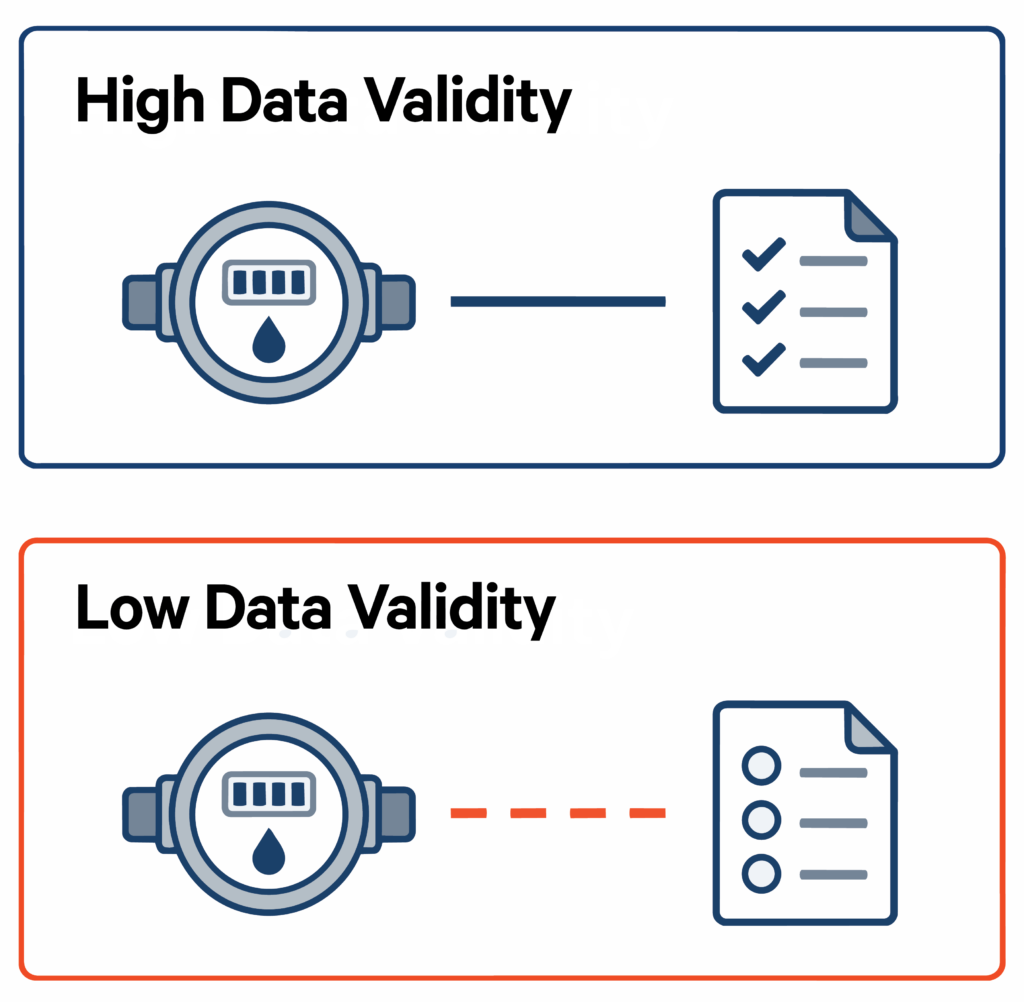
Why does this matter? Well, the distinction is critical because a utility should be cautious about investing millions of dollars to address apparent water losses if the data itself is questionable. In many cases, improving data quality is the most cost-effective first step towards reducing NRW. For this reason, industry organizations such as AWWA emphasize that improving data validity and reducing NRW are parallel efforts. A utility with a moderate NRW score and high data validity score often has a better understanding of its system than a utility reporting exceptionally low NRW and a low data validity score.
In other words, before you can effectively manage NRW, you must first be confident that it is being measured correctly.
How to Improve a Water Audit Data Validity Score
As NRW has been a frequent tension point for many water utilities, we recognize that the first step in stabilization of NRW is by improving the data validity score. However, we also recognize that making procedural shifts and improvements to data capture strategies is a bit more daunting at first glance. Most importantly, utilities may be struggling with data reporting or how much opportunity there is to capture data.
When attempting to address a low data validity score, it is tempting to seek a catch all solution package via technology. While AI and advanced analytics offer significant opportunities to improve NRW management, their effectiveness ultimately depends on the quality of the underlying data. Therefore, the deficit isn’t where technology can fit; it’s where procedures can be improved.
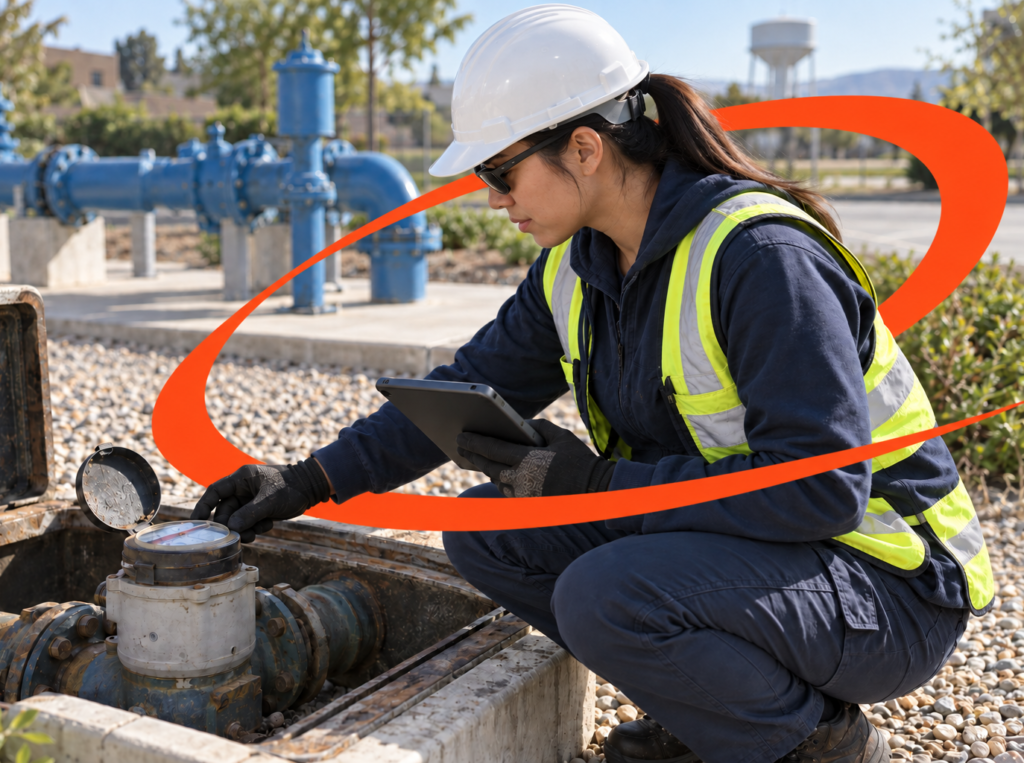
Before implementing advanced technologies, utilities should focus on foundational actions that often deliver the greatest return on investment. These include establishing clear procedures for data collection and management systems, improving communication and integration between operational, billing, GIS, and asset management systems, and implementing routine meter testing and calibration programs.
By identifying and addressing these data collection challenges, utilities can build greater confidence in their water audit results and make more effective decisions for managing non-revenue water.
Data Collection Improvement Strategies for Water Audits
Establishing clear ownership of audit data, standardizing data collection practices, routinely reconciling operational and billing records, and creating regular communication channels between departments can dramatically improve water audit accuracy. Utilities should also document assumptions, establish formal meter testing and calibration schedules, and track operational activities such as flushing, fire-fighting, and main breaks throughout the year.
One of the greatest advantages of improving NRW data and audit practices is that these efforts rarely stand alone. In fact, many activities that support NRW reduction also provide direct benefits to other strategic initiatives. For example, lead service line replacement programs often require utilities to improve customer records, verify service line inventories, and enhance geographic information system (GIS) accuracy, all of which strengthen the data used in water audits. Similarly, advanced metering infrastructure (AMI) and meter replacement programs can improve customer consumption accuracy, identify apparent losses, and provide valuable consumption data that improves both the NRW calculation and the data validity score. Utilities implementing asset management programs frequently develop better asset inventories, condition assessments, and work management processes, which can help identify infrastructure-related losses and prioritize leak reduction efforts. Even initiatives focused on SCADA modernization, hydraulic modeling, capital planning, and digital transformation can contribute to improving data quality and system visibility.
This integrated approach helps maximize limited resources, avoids duplicating efforts, and creates a stronger foundation for data-driven decision making across the organization. These relatively simple adjustments often provide substantial improvements to that data validity score while creating a stronger foundation for future investments in advanced metering, analytics, and AI-based solutions. Before looking for expensive answers, utilities should ensure that their process consistently produces reliable and replicable data.
Start With the Water Audit
NRW as a whole is a daunting prospect for utilities. The causes are often complex, the data may be incomplete, and the solutions are rarely as simple as repairing a few leaks. However, the most important step is not finding the perfect solution; it is simply getting started. Acknowledge that NRW may be impacting your system and commit to understanding its extent serves as the foundation of any successful non-revenue management program.
The water audit provides that crucial first step. More than just a calculation, it establishes a baseline for both your NRW performance and the validity of the data used to measure it. The initial results may reveal opportunities for improvement in metering, data management, operational procedures, or infrastructure condition. Just as importantly, they provide a roadmap for where to focus future efforts. Utilities do not need perfect data or sophisticated technologies to begin the journey. By conducting a water audit, improving data quality over time, and building organizational awareness around NRW, utilities can make steady, measurable progress towards greater efficiency, stronger financial performance, and more sustainable water management. The key is not perfection, but rather taking the first step and beginning the process.