Featured, Insights • November 12, 2026
Crossing Boundaries: Carrying Embodied Carbon Considerations from Design through Construction
Projects aiming to reduce embodied carbon require clear communication of project objectives from design to construction. AEC project delivery models can make this information transfer difficult because project roles are divided between design and construction. This increases the likelihood of siloed project teams, which raises the risk of missed carbon-reduction targets and rework. Project owners need a clear understanding of the risks of embodied carbon misalignment, and design considerations must carry through to construction.
Why are Embodied Carbon Targets Lost During Construction?
Embodied carbon design targets can be difficult to carry from design to construction due to operational silos emphasized by some project delivery models. Traditionally, project processes pass information and documentation as design ends and the construction team begins. The challenge is that this separation creates silos and affects communication. In this setup, teams develop separate outcomes: design outcomes and construction outcomes. This creates a paradox because embodied carbon construction outcomes are often determined during design, while design outcomes can depend on construction performance.
The Structural Engineering Institute defines it as “the sum of greenhouse gas emissions released during the following life-cycle stages: raw material extraction, transportation, manufacturing, maintenance, renovation, and end-of-life for a product or system.” The concept itself is multifaceted and has implications across the project life cycle. So, we must consider how effective our embodied carbon reduction strategies are when our design team and construction team don’t communicate effectively. Other practitioners also note the effects of miscommunication due to silos, finding that 30% of project rework stems from miscommunication (projectmanagement.com). This siloed pattern significantly raises risk probability, increasing project costs, extending the schedule, and increasing carbon emissions as work is delayed.
To effectively meet embodied carbon targets, our guidance below offers considerations for owners to make early during design to ensure design goals are clearly carried through construction.
What are the Critical Embodied Carbon Considerations During Design?
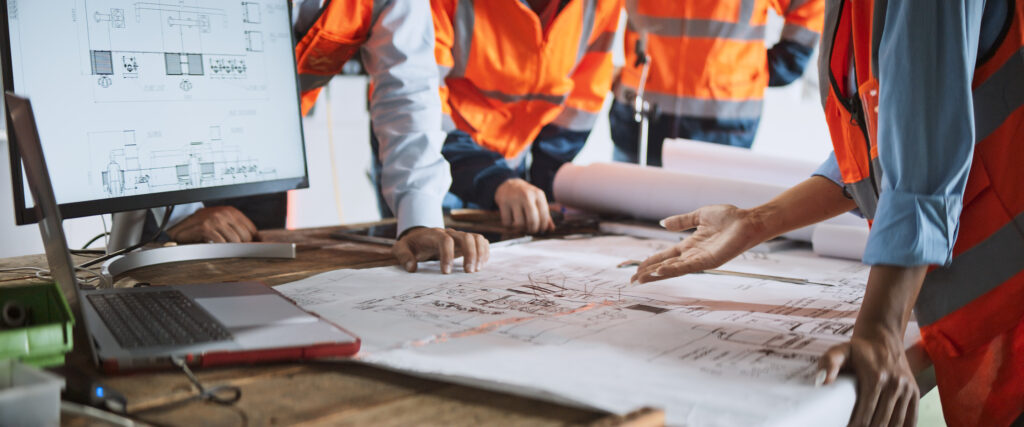
Some critical considerations that can ensure embodied carbon design considerations are accurately reflected in construction activities include:
Considering Delivery Model Affordances
While delivery models can emphasize design and construction separation, it’s important to look for effective ways to operate within the model to help the project flow seamlessly. Early involvement of the construction team is one effective way to deconstruct that silo. As we defined embodied carbon, we noticed that some embodied carbon considerations fall more on the construction side of the delivery fence. Construction teams are involved in transporting, managing, and building the built environment using the selected materials. Discussing these activities with the construction team early in design ensures design specifications are met and that embodied carbon is considered more comprehensively.
When embodied carbon targets are communicated properly from design to construction, carbon-efficient strategies become available and can be executed properly, such as the following:
Materials Reuse
Construction teams play a big part in the sourcing and reuse of materials. The United States Environmental Protection Agency (EPA) notes that modular and deconstructable designs are among the most sustainable design practices.
However, construction teams must coordinate to ensure the right materials are used, brick features are easy to break up, and the structural system is sound for later management (EPA).
There’s even an opportunity to reuse soil that’s excavated from a site.
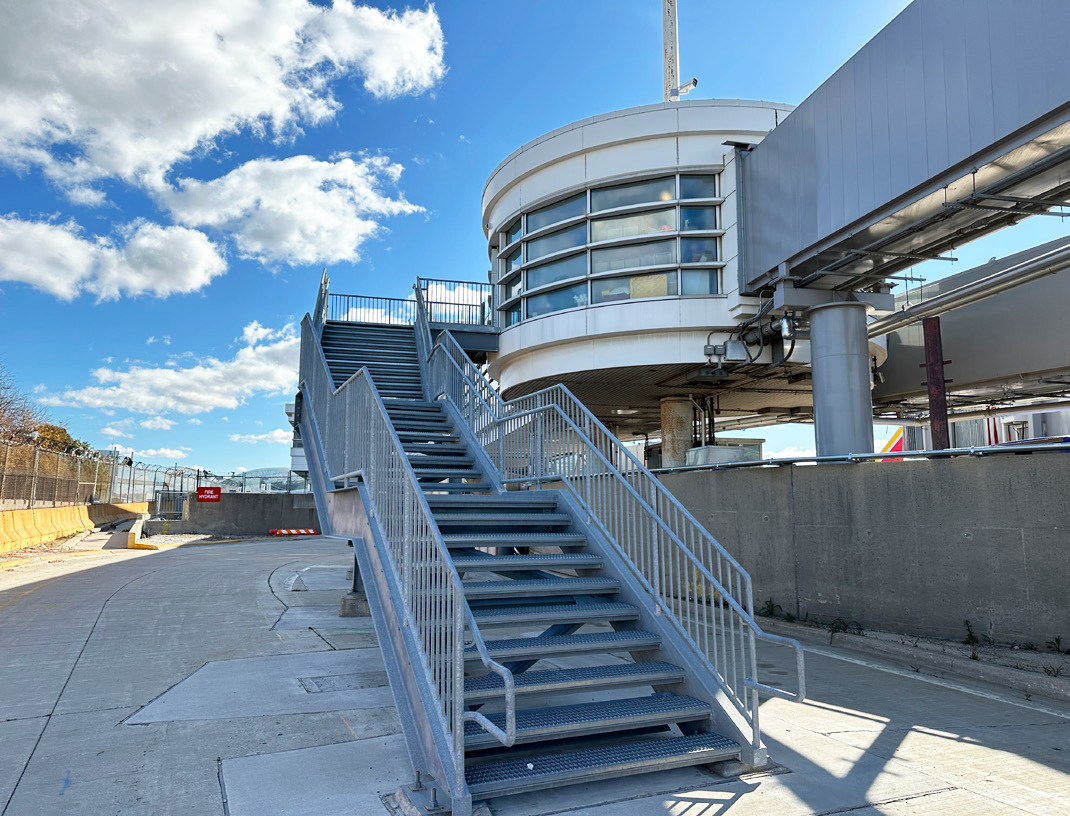
Lead Tunnel Design at O’Hare International Airport
The design and construction team used this strategy during our Lead Tunnel Design project at O’Hare International Airport. A common practice is to bring in new soil where needed after excavation, which increases emissions as heavy vehicles operate.
Using the excavated soil from the site mitigates carbon emissions from these vehicles.
View Project →Light Materials
It’s apparent that materials decisions matter when reducing embodied carbon emissions. The benefits are not only with the materials themselves, but also the implications of managing the material.
For example, using timber as a structural alternative to steel or concrete already reduces carbon. A 2018 report by the American Council for an Energy-Efficient Economy (ACEEE) mentions that steel and concrete manufacturing accounts for 11% of global carbon emissions.
Reducing this percentage is a strong embodied-carbon strategy, but timber’s weight can also accelerate construction schedules.
In fact, Wood Research & Development finds that timber weighs between 550 kg/m³ and 700 kg/m³, while concrete and steel weigh 2,400 kg/m³ and 7,700 kg/m³.
| Material | Density |
|---|---|
| Timber | 550–700 kg/m³ |
| Concrete | 2,400 kg/m³ |
| Steel | 7,700 kg/m³ |
Source: Wood Research & Development
Transportation Strategy
As we discuss mitigating carbon emissions from managing materials, transportation is also considered.
The longer construction vehicles are on the road, the more carbon emissions the project contributes. Vendor locations matter, as nearby vendors reduce carbon emissions.
There are also routes to consider. Identifying the most efficient routes helps account for the embodied carbon associated with materials handling.
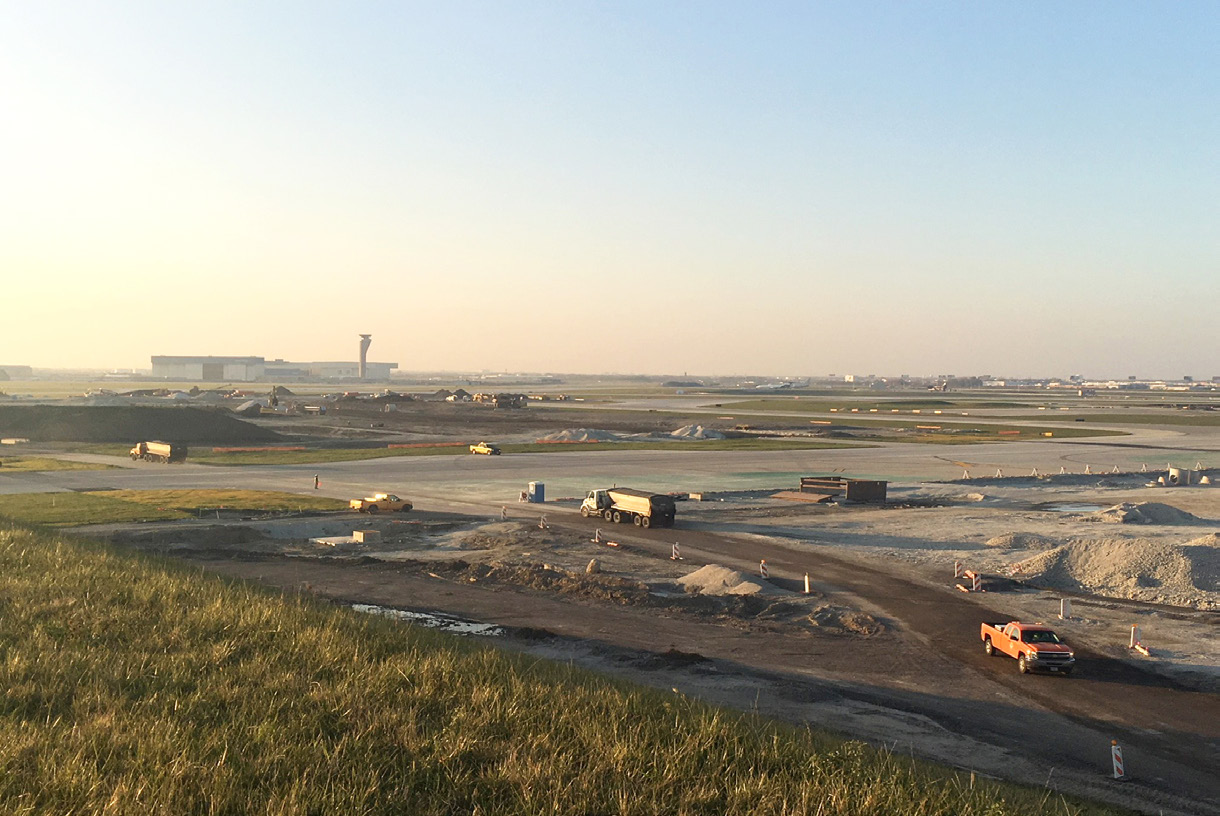
Runway 9C-27C & Associated Taxiways at O’Hare
As reducing travel lengths is part of the transportation strategy for carbon emissions, similarities are found in our Runway 9C-27C & Associated Taxiways project, also at O’Hare.
The teams developed a new, major runway in the middle of the airport to create a more efficient airside system. This reduces the routes each aircraft must navigate airside and, consequently, lowers emissions from aircraft operations.
View Project →Making Informed Vendor Selections
To consider embodied carbon more comprehensively, vendor selection is critical to complete early during design. As stated, the transportation of building materials is also considered when calculating embodied carbon emissions. Vendors farther from the project site require longer travel times, increasing the project’s carbon emissions.
Considering vendor locations more closely targets one aspect of vendor selection; teams first need to determine which materials are being used. Material selections are what will primarily dictate which vendor to use. Identifying the preferred material and the closest vendors to the project site both help reduce the carbon emissions associated with vendor selection.
Early Coordination Offers Decision Flexibility
Mistakes or even constructability concerns are inevitable in the AEC industry. In the context of embodied carbon, we can consider risks early on. Because 80% of embodied carbon emissions stem from material decisions (New Buildings Institute), and material decisions are design considerations, the greatest opportunities for flexibility come before mistakes are made. Tight project budgets and schedules further constrain teams, eliminating the opportunity to deliberate over thoughtful alternatives. When corrections are needed during design and construction teams are included, both teams can consider alternatives without compromising embodied carbon targets.
Milhouse Perspective
Delivery models can create tension as critical decisions move from design to construction. While the models emphasize boundaries between design and construction teams, each team should consider ways to cross that boundary, especially during design. Designs that consider construction activity and the impact of project decisions have an opening to embodied carbon reduction throughout the project.
Milhouse is intentionally structured in a way that enables us to provide design and construction expertise. Having design and construction teams in-house means siloes are deconstructed, and embodied carbon considerations can seamlessly flow from design to construction.