
Featured, Insights • July 23, 2026
How Multidisciplinary Engineering Can Reduce Risk on Complex Airport Projects
As engineering and construction professionals, airports are one of the most complex project sites we can encounter. Like many projects, they require close consideration of the project site itself, looking at the land as we develop a new construction or as we enhance an existing facility. However, when we apply this vision to an airport, we’re only provided with one perspective of a much larger system.
Single areas within an airport are not necessarily standalone units. Airports exist as an ecology of different entities and operations. As engineering partners on these projects, we evaluate a system that requires continuity and involves many key players. Let’s discuss the multifaceted nature of these complex sites and the perspectives that benefit engineering partners on these projects so we can continuously improve on how we serve airports and the communities.
Why Operational Continuity Is Critical During Airport Construction
One of the most critical, if not the most critical, facet of airport projects is the need to maintain operational continuity throughout the project site and airport. Airports have a responsibility for providing constant, reliable service and meeting their users’ travel needs. Operational continuity isn’t just critical on the airside of the airport, but also the landside.
At the Hartsfield-Jackson Atlanta International Airport, our team needed to consider how to maintain taxiway access and operations during adjacent taxiway construction. There was ongoing construction on their Concourse T North Extension that limited access to Ramp 1N, placing additional strain on Taxiway V. The airport needed to find a way to provide more direct access to the ramp while reducing traffic and stops along the taxiway. As the bypass was proposed by the airport, the team provided a workable design and implementation, which provided access to Ramp 1N and new gate positions and successfully maintained operations throughout the taxiway and airside.
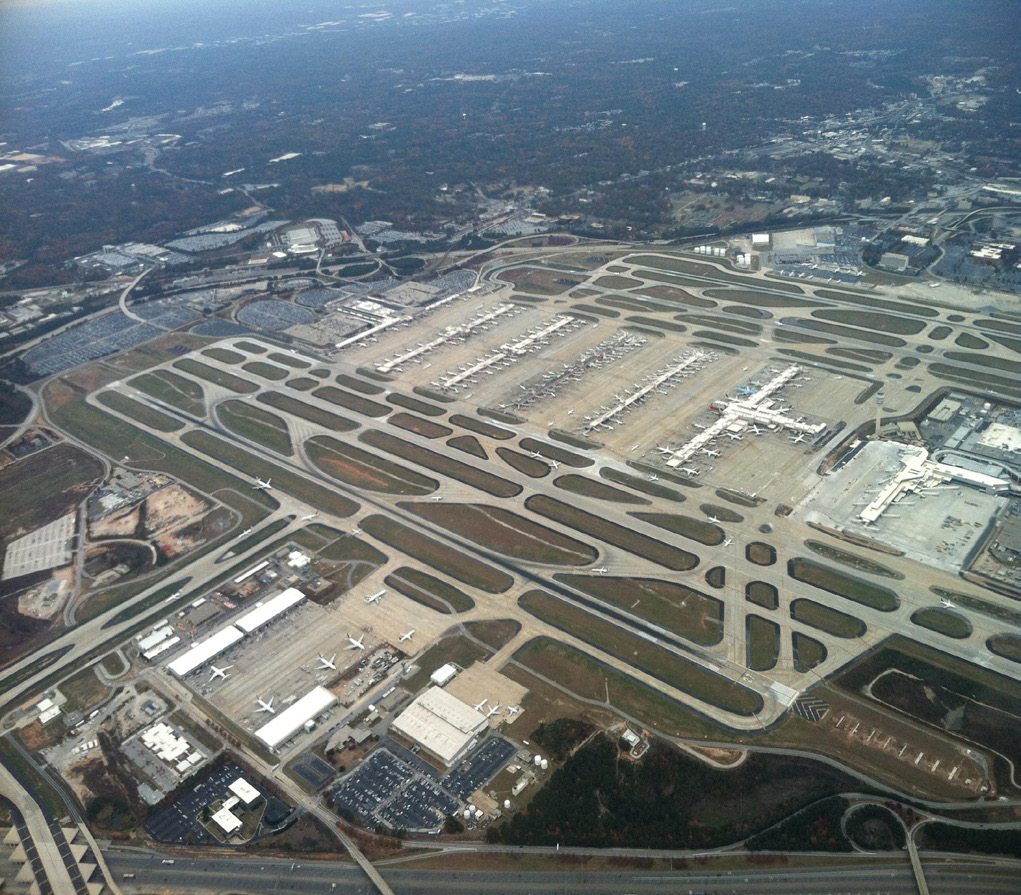
This project is a great example of how complexity often requires creative solutions, with the goal of mitigating risks. Consider the detriments to the airport with that closure of Taxiway V in this context. The loss of revenue due to closure, limited flight availability, and use of more aircraft fuel due to longer taxi routes needs to be considered in each project. However, the loss of public trust is arguably the greatest risk to consider when projects affect operations. As stated previously, the airport’s primary responsibility is to meet the travel needs of its users. This risk coincides with the risk to the airport schedule. Maintaining flight schedules is imperative as any airport project can trigger delays, which can affect all flight patterns and times. This places immense strain on operations of the whole airport, while also reducing the trust to deliver to users. When engineering partners navigate projects with the consideration of operational continuity, we don’t just maintain relationships with airport owners, but also with the communities they serve.
Airports are Operational Networks
As we see with the need to maintain operational continuity, airport projects are immensely complex. This isn’t necessarily due to the nature of the project, but due to airports existing as an inherently complex site. Operations throughout are networked and each rely on one another to maintain constant, fluid operations and communications. Two critical networks that exist within an airport are the physical network and the entity network. As we involve one area or entity during a project, we consider how this also affects another in some capacity. This perspective provides engineering partners with an opportunity to get it right the first time, preventing operational, project, schedule, and cost challenges down the road.
How Construction Can Affect an Airport’s Physical Infrastructure
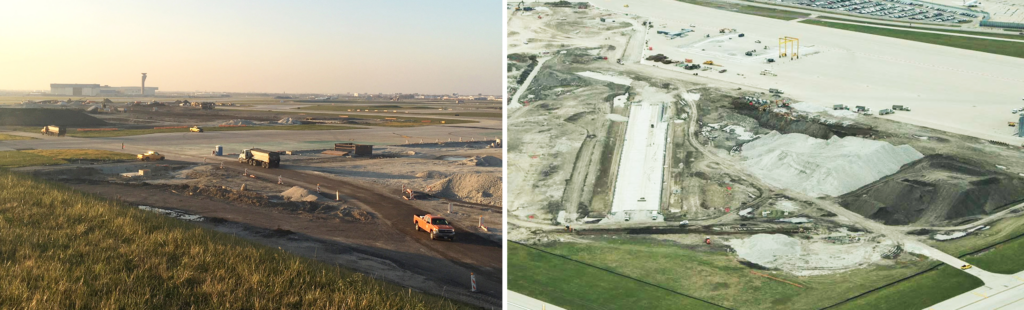
Taking a step back and looking at the airport more holistically reveals how networked each area and function really is. When a portion or an entire area is under construction, it’s likely to affect many other areas and operations. Consider our Runway 9C-27C & Associated Taxiways project, which developed a new, major 11,245 ft-long x 200-foot-wide air carrier runway and parallel taxiways right in the middle of O’Hare International Airport—one of the world’s busiest airports. As you’d expect, developing a runway of this scale that’s situated in the middle of the airport required the removal or relocation of existing buildings, utilities, and taxiways. This included removing and relocating airline maintenance facilities and service roads in the hangar area along with developing alternate paths for aircraft. To do so, work was phased so the airlines had the proper maintenance facilities in place before the existing facilities were demolished and also provided access to those facilities, all while not impeding airfield operations.
Which Agencies and Utilities Must Be Coordinated on Airport Projects
In addition to the physical network, there’s also the network of entities that also have a stake in the project or airport. Project entities can be governing agencies that impose policies over airports and airport activities. For example, all airports within the US adhere to the Federal Aviation Administration (FAA). The FAA ensures all airports within the US are maintaining an efficient, and practical, system that’s part of a much larger aerospace network across the country. By engaging the FAA at key points during design, the team can ensure a final product that integrates with this and other airports.
Entities on airport projects can also be utility agencies, such as gas, electric, communications, water, and others that serve the airfield and terminals. A client such as an airport has a large utility demand. Changes to the airfield layout or terminals can impact utility networks outside the airport property by changing the demand. Engaging utilities earlier in the process to understand their utility network and how the airport impacts their operations goes a long way in mitigating conflicts and coordination issues later in the project.
With these disparate entities in mind, we can see how the network starts to take shape. The FAA is situated as the governing entity that ensures compliance with operational and configuration standards. However, each utility also comes with their own considerations to make when their system is potentially impacted by project activities. This is also because site utilities are also networked on both the landside and airside. For example, if we relocate the gas utility on the airfield, will this affect another utility and how will service be maintained to buildings? This is a key consideration when operating in the utility system of an airport, and the probability of needing to incorporate multiple agencies is high, so we find a solution that benefits the airport operations while simultaneously benefiting each entity.
Benefits of Multidisciplinary Perspectives on Airport Projects
With these key complexities in mind, it’s important to consider what’s the best way to navigate each. Each project is unique and it’s our mission as the airport’s engineering partner to identify the most appropriate path forward. Our team’s multidisciplinary perspectives have enabled us to uniquely do just that—working with the airport to develop a plan and solution that works best for their configuration and objectives. We’re able to draw on different disciplines, knowledge, and experiences during each project before something becomes an issue.
Our team’s approach is always to be prepared and apply a holistic gaze over the airport so we can capture the project impact and airport improvements in a more complete way. We’ve been able to consider early on how to phase our projects to maintain operational continuity, consider how project activities in an area could affect the operations of another area and find solutions to remedy any operational issues, and consider each entity that requires input early so the team is prepared for and can navigate changes.
Being a multidisciplinary firm has also allowed our team to better understand and support robust project teams. As we’re equipped with experts in a variety of disciplines, from site/civil engineering to structural and even construction management, we’re able to lend support to our project teams and provide input wherever needed, which improves the overall process and team rapport.
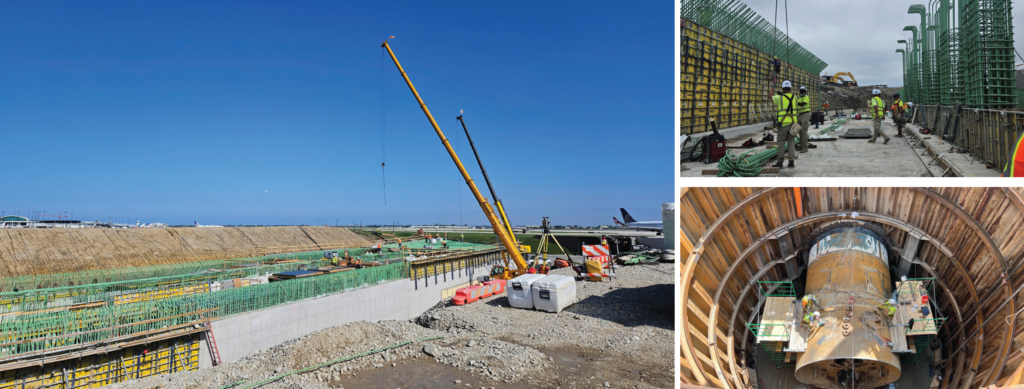
Or, when we encounter shifts in the project scope during an ongoing project and a new service is now required, Milhouse has been capable of stepping in and providing that service, simplifying the contract process and avoiding schedule delays. We experienced a similar shift on our Lead Tunnel Design and Engineering Terminal Area Plan project at O’Hare. The project scope mostly captured site utility design, however, as the project progressed, opportunities came up for structural and MEP design. Milhouse was able to take on that scope element and continue supporting the development of a critical piece of infrastructure that will convey passengers, baggage, and utilities between concourses.
Supporting with multiple disciplines has enabled us to make considerations both within and outside of the traditional scope of each, effectively communicate our versatile expertise and perspectives to the rest of the team, and consider and prevent risks before they become an issue. As we bring this diverse expertise to the project, we’re able to make operational moves across the project team and become a better partner to the airport, considering the site from multiple perspectives and functions.
The Right Engineering Partner Can Simplify Airport Project Delivery
While airport projects and sites may be complex, there are ways to implement some simplicity to help navigate each facet. Particularly, making critical considerations early on that promote operational continuity, consider the broader networks within the airport and how our actions affect them, and broadening our disciplinary perspectives on each project.
At Milhouse, we’ve effectively navigated each complex airport facet and seamlessly incorporated our multidisciplinary perspectives. This has ensured that our solutions are not just considerate of being cost-saving and compliant with the project schedule, but also that they’re robust and strategically meet airport needs and support operations.
Airport infrastructure has to perform while people, aircraft, crews, and cargo keep moving. Milhouse helps aviation clients improve the systems behind that movement with coordinated engineering solutions built around safety, operations, and long-term performance.

Looking for experts who can consider the totality of the airport?
We’d love to hear from you.
CONTACT US →